Why do two pages on the same topic, aimed at similar keywords, get wildly different results? One earns steady clicks and trust. The other sits on page two, even though the writing seems decent. That is often what happens when AI-assisted content looks polished but lacks depth. The difference is usually not magic, and it is rarely one tiny tweak. It is how the page is built from the top down.
That is where on page seo still matters, maybe more than ever. In 2026, search engines are better at reading context, judging helpfulness, and measuring whether a page actually satisfies the search. A strong page does not just repeat a phrase and hope for the best. It aligns intent, structure, clarity, media, links, and technical signals so everything points in the same direction.
Think of it like setting a table for a guest. The meal matters, but so do the plates, the lighting, and whether the guest can find the front door. Search works the same way. Great content without clean titles, useful metadata, fast media, and smart internal links leaves value on the table.
This guide walks through what still works, what changed, and how to build a repeatable process you can use for new pages and older ones that need a refresh.
What On Page SEO Means in 2026
Page level seo in 2026 is less about isolated tricks and more about alignment. Search engines want to see that a page answers the query, feels trustworthy, loads smoothly, and fits logically within the rest of the site. If one piece is weak, the whole page can underperform. Small signals add up.
How user intent, content quality, and page experience now work together
A page used to rank with decent copy and a few exact match signals. Now the bar is higher. If someone searches for a comparison, they expect options, tradeoffs, and clear criteria. If they search for a how to query, they want steps, examples, and reassurance that the advice is current. Intent is the map. Content quality is the route. Page experience determines whether the trip feels smooth or frustrating.
That means onsite seo starts before you write. Ask what the searcher is trying to accomplish in the next five minutes. Do they want to learn, compare, buy, or fix something quickly? Then build the page to meet that need directly. A clean layout, scannable subheads, and helpful visuals reduce friction. Relevance gets you considered. Usability helps you stay there.
Why a repeatable checklist beats one off SEO tweaks
One off edits feel productive because they are quick. You change a title, compress an image, or add one internal link and hope for a lift. Sometimes that works, but it is hard to scale and even harder to diagnose. A checklist turns page optimization for seo into a system. It reduces missed steps and makes quality more consistent across the site.
Teams that publish often see this quickly. One editor writes strong copy, another forgets canonicals, and a third uploads giant images straight from a design file. Results get noisy. A checklist fixes that. It creates a shared definition of done. Simple beats clever. Every time.
Title Tags That Match Search Intent and Earn Clicks
Titles still do two jobs at once. They help search engines interpret the page, and they help humans decide whether to click. When those goals line up, results tend to improve. When they pull against each other, pages lose attention.
How to structure primary keywords, modifiers, and brand terms
For on page seo, a strong title starts with the main topic and then adds context that matches what the searcher wants. A practical pattern is primary topic first, then a modifier, then brand if it adds trust. Modifiers can signal freshness, format, audience, or purpose. Think checklist, examples, pricing, beginner guide, or 2026.
A good title sounds specific, not stuffed. It promises one clear outcome. A SaaS company I worked with rewrote 40 older article titles to better match intent. Impressions stayed almost flat for a month, but average click through rate rose from 2.9 percent to 3.8 percent. Same topics, better framing. Tiny edits can do big work.
| Goal | Better pattern | Weaker pattern | Why it works |
|---|---|---|---|
| Informational guide | On Page SEO Checklist for 2026 | SEO Tips | Specific topic and clear timeframe |
| Commercial comparison | Best CRM for Small Teams, Features and Pricing | CRM Software | Matches comparison intent |
| Local service page | Emergency Plumber in Austin, Fast 24 7 Help | Plumbing Services | Adds location and immediate need |
For more nuance, Google's guidance on title links is worth revisiting.
What to avoid in 2026: duplication, truncation, and clickbait phrasing
Duplicate titles still cause confusion, especially on ecommerce collections, location pages, and blog archives. If five pages share nearly the same title, search engines have a harder time choosing the best result, and users have a harder time spotting the right one. Each title should earn its spot.
Truncation matters too, but not because there is a magic character count. Search displays vary by device and query. Aim for titles that front load meaning so the important part appears early. If the last words disappear, the promise should still be clear.
And clickbait is a trap. If the title oversells and the page underdelivers, users bounce, trust drops, and the snippet can underperform over time. Curiosity is fine. Misleading is not. Say what the page actually does.
Metadata That Supports Rankings, Snippets, and Indexing
Metadata is not glamorous, but it is one of the cleanest ways to improve control. It helps shape snippets, clarify page purpose, and prevent mixed signals. Good metadata will not rescue weak content, but weak metadata can absolutely hold good content back.
Meta descriptions that improve qualified CTR without overpromising
A meta description is best treated as ad copy for the right visitor, not every visitor. In on page seo, that means summarizing the benefit of the page in plain language and reinforcing the intent behind the query. Mention the topic, mention the outcome, and give the searcher a reason to choose your result over a vague alternative.
Qualified clicks matter more than random clicks. If the page is a beginner guide, say that. If it includes examples, templates, or a checklist, bring that forward. One ecommerce brand I reviewed cut vague descriptions and rewrote them around actual product concerns, like sizing and delivery windows. Organic clicks rose modestly, but conversion rate from organic traffic improved more because the snippet set accurate expectations.
Clean URLs, canonicals, and robots directives for better page control
URLs should be short, readable, and stable. Canonicals should clearly point to the preferred version of a page when duplicates or close variants exist. Robots directives should be used carefully, because a single wrong setting can keep a useful page out of view. This is where content seo meets technical discipline.
Use these checks to keep page control simple and reliable:
- Keep URLs human readable and avoid unnecessary dates, parameters, or clutter.
- Use canonical tags when similar pages could compete with each other.
- Apply noindex only when you truly do not want a page in search.
- Make sure important pages are crawlable and not blocked by accident.
Good metadata reduces ambiguity. Search engines appreciate clear instructions, and so do future you and everyone else on your team.
Media SEO: Images, Video, Alt Text, and Performance
Media can strengthen understanding or quietly damage performance. The right image can clarify a concept in seconds. The wrong file can slow a page, muddy context, and create accessibility gaps. Visuals should support the page, not weigh it down.
Filenames, alt text, captions, and surrounding copy that add context
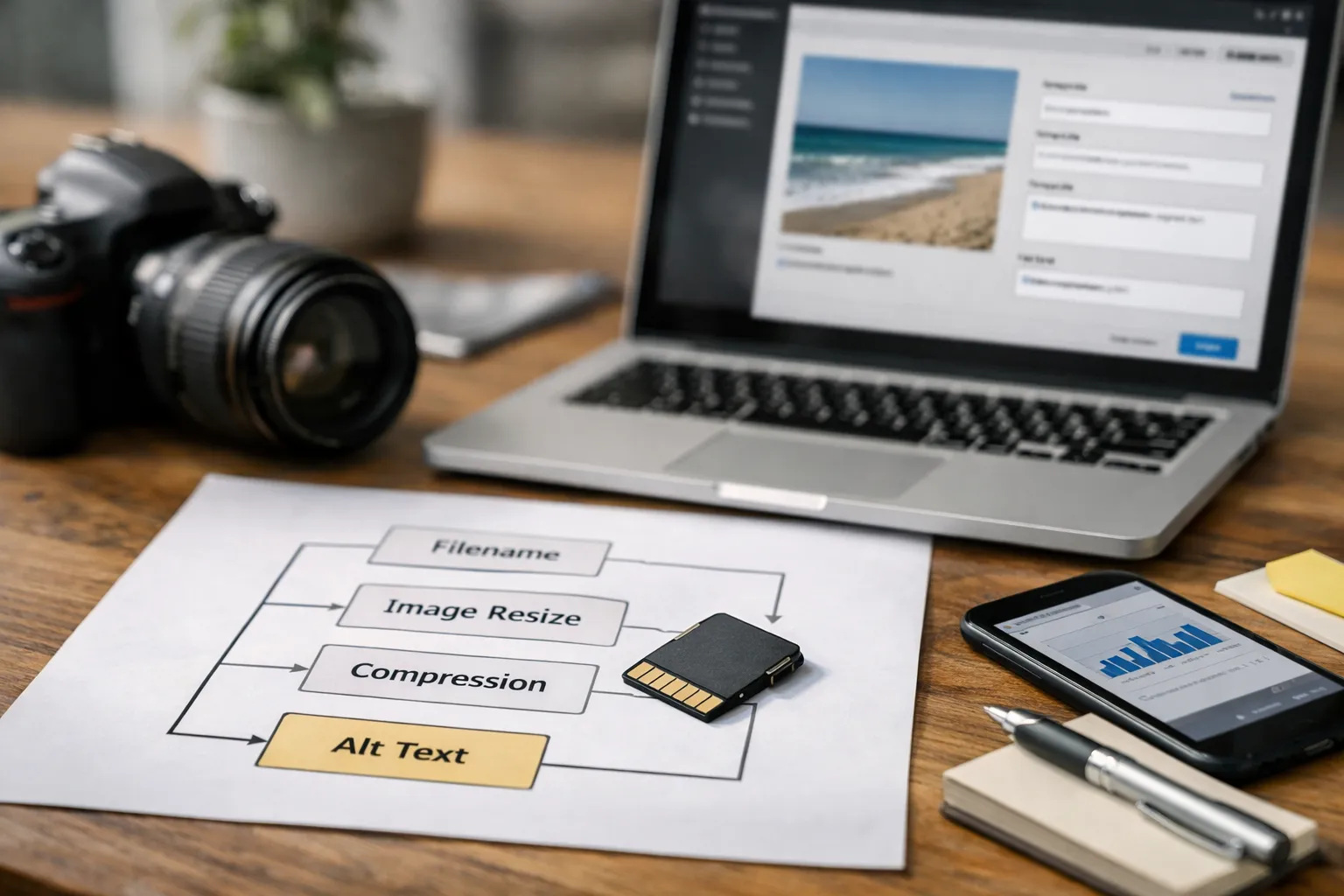
Images work best when every signal around them is descriptive. Use filenames that reflect the subject, not camera defaults. Write alt text for accessibility first, while still giving search engines useful context. Captions and nearby copy help reinforce what the media is showing, especially when the page covers a process or comparison.
For on page seo, a product shot named image1234.jpg with alt text that says photo is a missed opportunity. A file named technical-seo-audit-dashboard.jpg with alt text that explains what appears in the screenshot is more useful. Context beats cleverness. Google's image SEO documentation covers this well.
Compression, next gen formats, lazy loading, and embedded media choices
Performance is where many good pages stumble. Large PNG files, autoplay videos, and bloated embeds can make a page feel slow before the user even reaches the answer. Compress images before upload, prefer modern formats where appropriate, and use lazy loading so below the fold media waits its turn. The web.dev guide to lazy loading is a helpful reference, and tools like TinyPNG can shrink files quickly before publishing.
When it comes to video, ask whether an embed truly adds value. Does the clip demonstrate a process, answer a common objection, or help users complete the task? Great. If it is there just to fill space, skip it. Fast beats fancy.
Internal Linking That Strengthens Relevance and Crawlability
Internal links are the roads between your pages. Without them, search engines may still discover content, but they will understand it less clearly and revisit it less efficiently. Users feel this too. A page without useful next steps is like a hallway with locked doors.
Anchor text, link placement, and topical relationships
The best internal links appear where readers naturally want more detail. Anchor text should describe the destination in a way that feels natural inside the sentence. Generic phrases like click here waste context. More specific phrasing helps both users and crawlers understand why the linked page matters.
For on page seo, relevance is the key test. If you mention canonical tags, link to your deeper guide on canonicals. If you reference product comparisons, link to the comparison page, not the homepage. Links near the top of a page can help discovery, but links inside the most relevant section often carry stronger contextual meaning. Good links feel like helpful handoffs.
How to connect hub pages, supporting articles, and conversion pages
A strong site structure usually includes hub pages that target broad topics, supporting articles that answer narrower questions, and conversion pages that help users take action. On site seo works better when those layers connect intentionally. The hub introduces the topic, the supporting pieces deepen it, and the conversion page serves the ready visitor.
Imagine a financial planning site. A hub page on retirement planning links to articles about IRA rules, catch up contributions, and withdrawal strategies. Those articles then link back to the hub and forward to consultation pages where appropriate. This creates a topic cluster that is easy to crawl and easy to follow. Search engines see the relationship. Users do too.
A Practical On Page SEO Checklist for New and Existing Pages
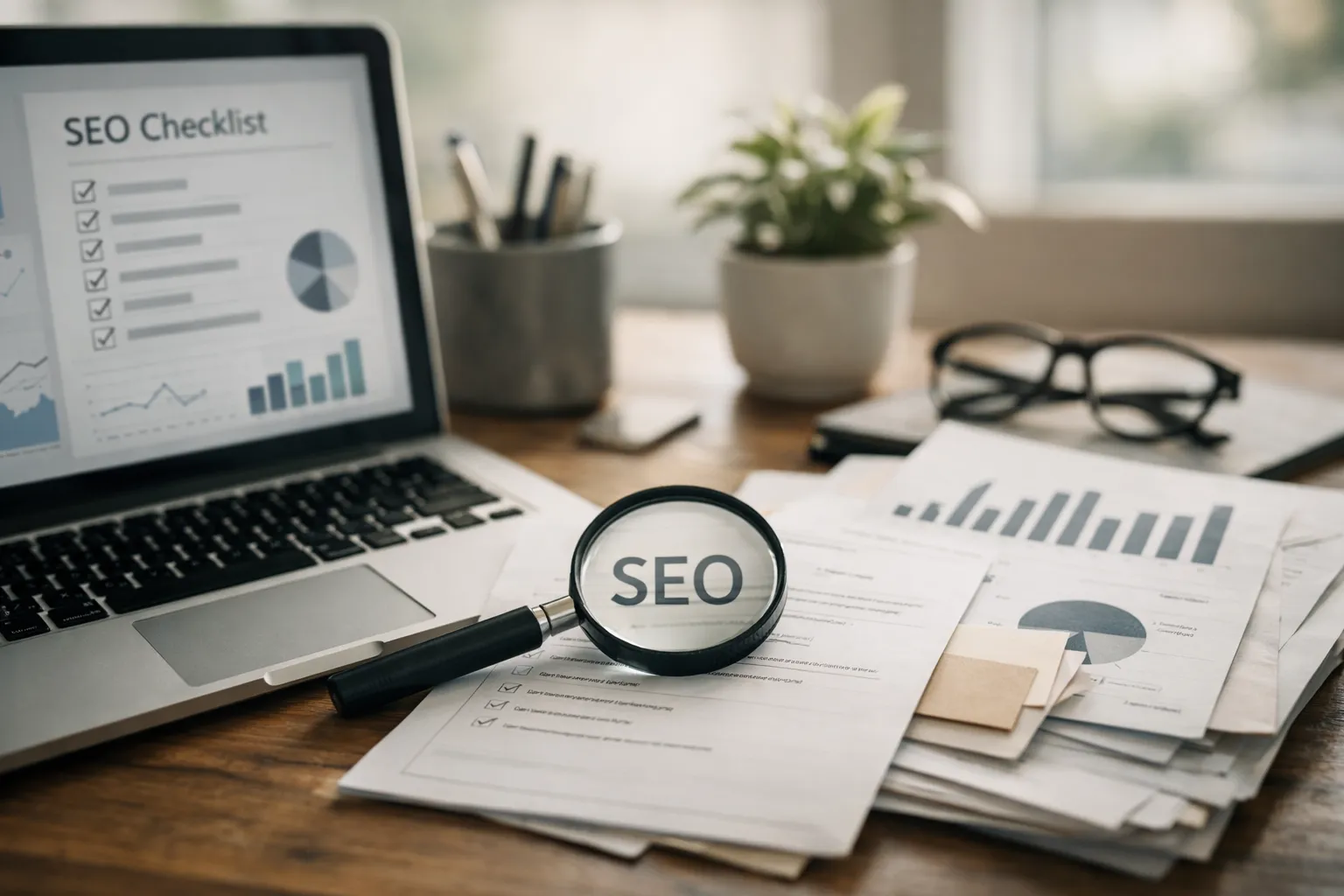
A checklist matters most when deadlines get tight. It keeps avoidable mistakes from slipping through and makes refresh work much faster. If you publish regularly, this section can save hours of cleanup later.
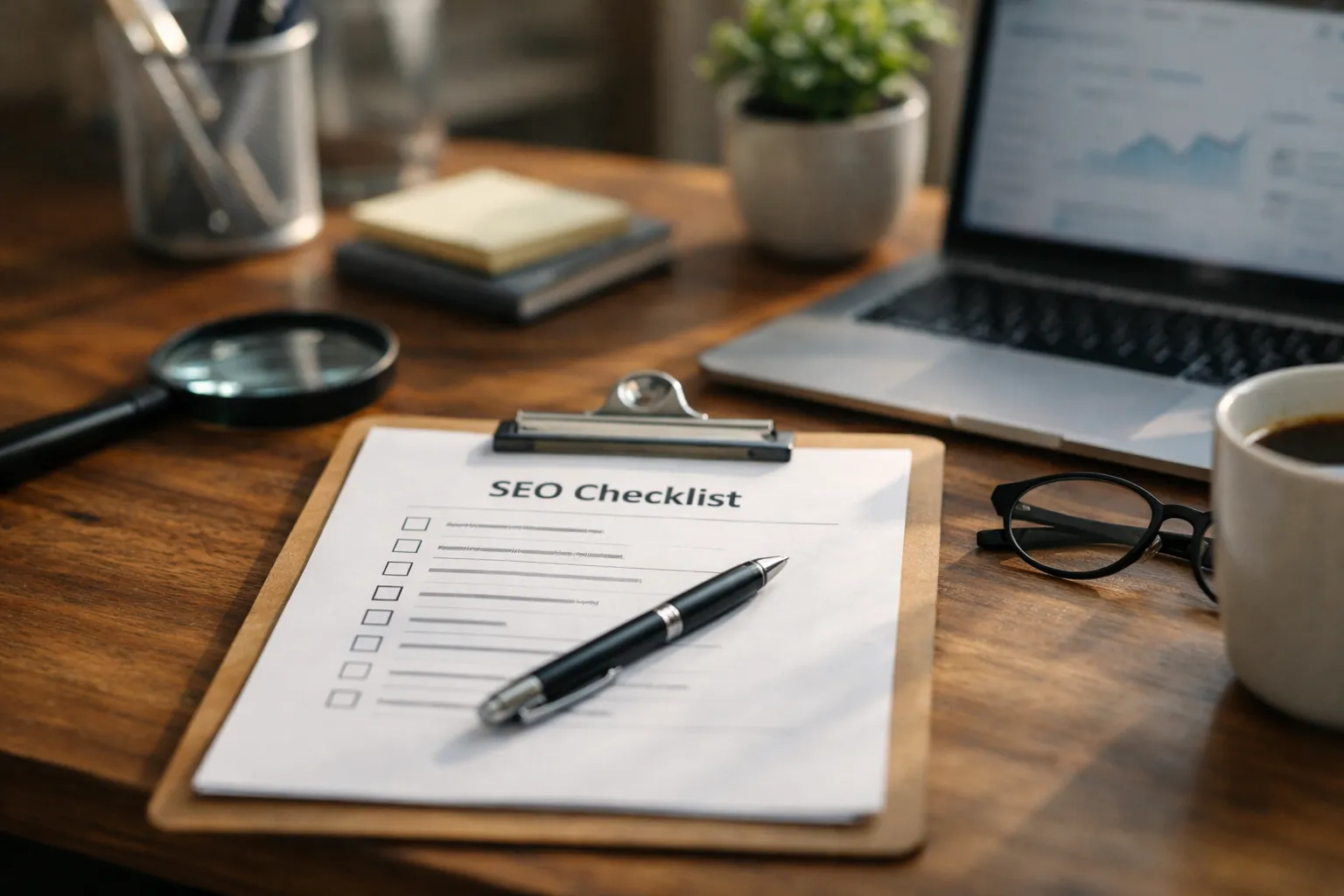
Pre publish checks for titles, metadata, media, and links
Before a page goes live, review the visible copy and the behind the scenes signals together. Read the title and meta description as if you were scanning search results on your phone. Test whether the page answers the query within the first screen or two. Check the images, links, and technical settings before you hit publish, not after traffic disappoints.
A simple pre publish pass can include:
- One clear search intent for the page, supported by the intro and subheads.
- A unique title and meta description that set honest expectations.
- Compressed media, descriptive filenames, and useful alt text.
- Internal links to related guides and one logical next step for the reader.
- Canonical, indexability, and URL checks completed before launch.
Refresh checks for decaying pages and underperforming SERP snippets
Refreshing older content is often faster than creating new content from scratch. When a page starts losing clicks, check whether intent shifted, competitors improved, or your snippet became less compelling. Sometimes the content is still good, but the packaging is stale.
One B2B blog I reviewed had three guides slipping for months. The fixes were not dramatic. We updated titles to better match current wording, tightened meta descriptions, replaced heavy hero images, and added fresh internal links from newer articles. Over six weeks, organic clicks across those pages rose 27 percent. That is the power of repeatable on-page optimization. Refreshes work when they target the real friction.
FAQ for On Page SEO and Final Takeaways
The basics still matter, but the details are often where results are won or lost. If you keep intent, clarity, and usability in sync, most page seo decisions become easier. Here are the questions people ask most when they want cleaner execution.
How long should title tags and meta descriptions be, and do exact match keywords still matter?
There is no perfect character count that guarantees a full display, because snippet width changes by device and query. A practical approach is to front load the core topic and keep the wording tight. Meta descriptions should summarize the page clearly and make the click feel worthwhile, without sounding stuffed or salesy.
Exact match terms still help when they fit naturally, but they are not the whole story. Search engines understand variants, relationships, and intent far better than they used to. Use the primary phrase where it clarifies the topic, then write like a human. Clarity wins.
How often should you audit media and internal links, and what should you fix first?
For most sites, a light audit every quarter is sensible, with a deeper review for high value pages more often. Start with pages that already earn impressions but underperform on clicks, or pages that rank reasonably well but feel slow and unsupported. Those are usually your quickest wins.
Fix the issues that block satisfaction first. Improve misleading titles, broken internal paths, oversized images, and weak topical links before you chase minor tweaks. Onsite improvements compound over time. If you build pages that answer the query, load cleanly, and connect logically to the rest of the site, you make ranking easier and conversion smoother. That is the real takeaway: better pages tend to earn better outcomes.