Ever looked at a website and wondered why one page appears first while another, maybe even better written, is buried on page six? If you want to learn seo, that question is the right place to start. Search engine optimization is not magic, and it is not just for developers or marketers with expensive software. It is a set of practical habits that help search engines understand your pages and help people find what they need.
The good news is that beginners do not need to master everything at once. In fact, trying to do that is usually what makes SEO feel confusing. A better approach is to treat it like a 30 day workshop. First, you learn how search works. Then you set up a few tools, measure where you stand, choose topics people actually search for, improve your pages, and build steady visibility beyond your site.
Think of it like learning to read a map before taking a road trip. That is what this roadmap is for. It keeps the jargon light, the steps realistic, and the focus on progress you can actually see. By the end, you will not know everything, but you will know what matters first and what to do next.
Days 1-3: Learn SEO Basics and Set a Simple Goal
SEO makes more sense when you stop seeing it as a trick and start seeing it as communication. Search engines want to serve the best answer to a real question as quickly as possible. Your first three days are about understanding that exchange and setting one goal simple enough to measure.
What search engines look for and how rankings happen
When Google or Bing discovers a page, it first needs to crawl it, read it, and decide whether it belongs in the index. Then it compares that page with many others targeting a similar query. Relevance matters, but so do clarity, page experience, helpfulness, freshness when appropriate, and signals that suggest trust. The Google Search Central SEO starter guide explains this in plain terms, and it is worth skimming once instead of guessing.
Picture a librarian sorting thousands of books in minutes. A vague title, messy chapters, and missing labels make that job harder. The same thing happens online. Clear headings, focused topics, good internal links, and pages that load properly all help search engines understand what each page should rank for.
One line to remember: ranking is earned clarity.
How SEO supports traffic, leads, and wider marketing goals
SEO is not only about visits. Good optimization can support newsletter signups, booked calls, product sales, and even brand recall because people keep seeing your name when they search. That is why setting a simple goal early matters. Do you want more visits to a service page, more demo requests, or more downloads of a guide?
Choose one target for the next 30 days. A local business might aim to increase impressions and contact form submissions from service pages. A blog might focus on clicks to three cornerstone articles. When the goal is narrow, your choices become easier. You know which pages to fix, which keywords to research, and which metrics to watch.
A common beginner mistake is chasing everything at once. Traffic without purpose is just motion. Useful traffic is momentum.
Days 4-7: Set Up Your Tools, Fix Basic Site Issues, and Capture a Baseline
Now you need a dashboard, not a guess. Before you change titles, content, or links, set up a few tools and look at what your site is already doing. Baselines turn SEO from a feeling into a process.
Connect Search Console, Analytics, and review crawl and indexing basics
Start with Google Search Console and Google Analytics. Search Console shows queries, impressions, clicks, indexing status, and technical hints. Analytics helps you see what people do after they land, such as how long they stay and whether they convert. If you only use one tool in week one, make it Search Console.
Then check the basics. Can search engines crawl your pages? Are important pages indexed? Is your robots.txt blocking something valuable? Have you submitted a sitemap? Use URL Inspection on a key page to see whether Google can fetch it. If a canonical tag points somewhere else, or a noindex tag is present, you can spend weeks optimizing a page that search engines were never meant to show.
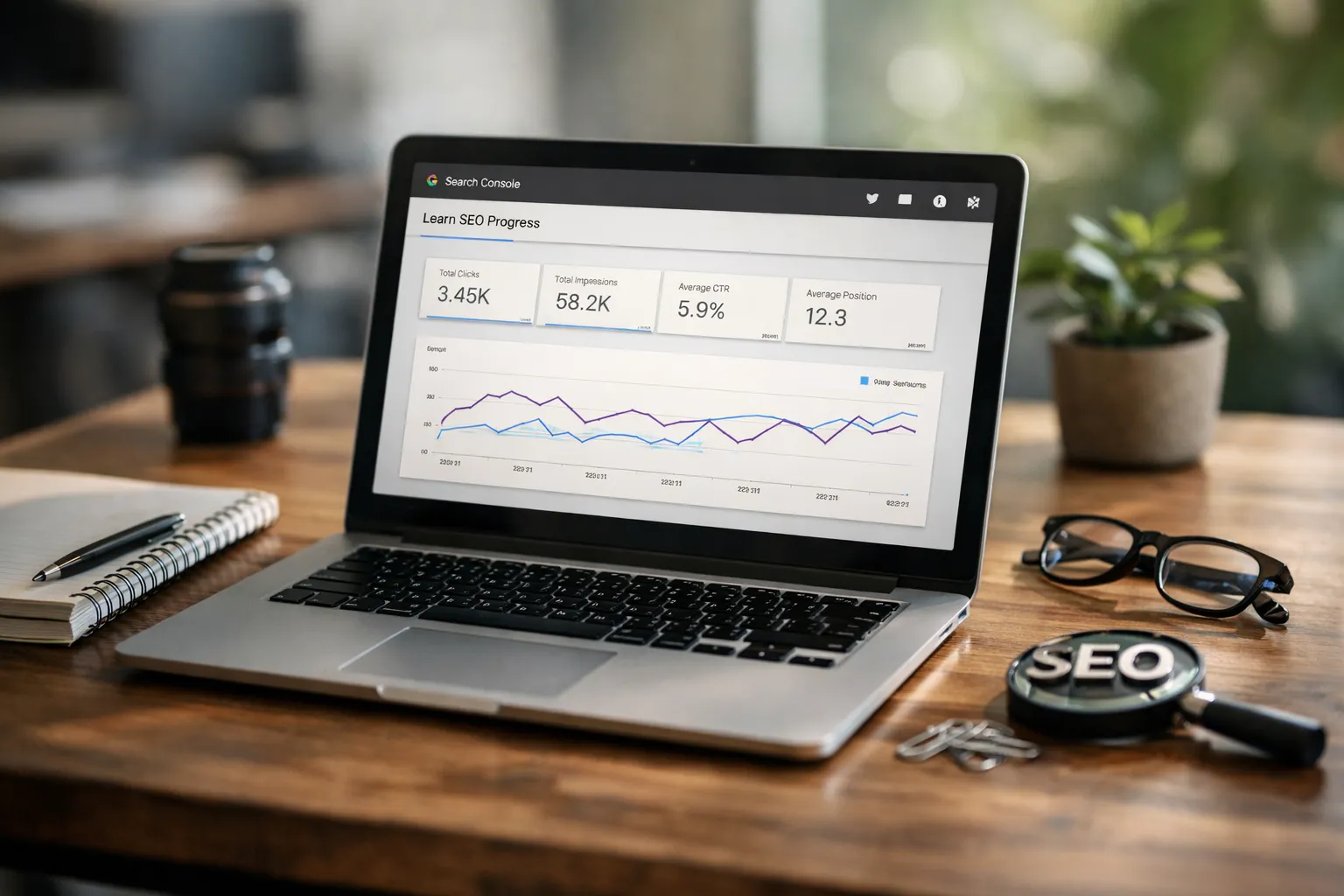
Record your starting pages, impressions, clicks, and conversions before making changes
Write down your starting numbers before you optimize anything. This matters because memory is unreliable. Many beginners make useful changes, forget what changed, and then cannot tell which action helped. A simple spreadsheet is enough, and dated notes beside each change make later review much easier.
If a page has 500 impressions and 12 clicks today, that is your reference point. If it reaches 900 impressions and 28 clicks next month, you have evidence, not a hunch. One local accounting firm I worked with fixed title tags on six service pages, added internal links from blog posts, and clarified its contact forms. In ten weeks, impressions rose from 1,100 to 3,400 and monthly leads grew from 3 to 11. Small moves, measured well.
| Metric | Where to find it | Why it matters |
|---|---|---|
| Indexed pages | Search Console | Confirms important pages can appear in search |
| Impressions | Search Console | Shows how often pages are being seen |
| Clicks | Search Console | Reveals whether your snippets attract attention |
| Conversions | Analytics | Connects SEO work to business value |
Days 8-14: Do Keyword Research for SEO Beginners
With your baseline in place, you can stop guessing what people want and start listening to search behavior. Keyword research is really audience research in disguise. This is where many people who learn seo start noticing patterns they missed before.
Find seed topics, search intent, and long-tail terms your audience actually uses
Begin with seed topics, broad themes tied to what you sell or teach. If you run a pet store, seed topics might include dog food, puppy training, and cat grooming. From there, expand into specific searches and look at intent. Is the searcher trying to buy, compare, learn, or solve a problem quickly?
Longer, more specific phrases are often easier for a new site to target because the searcher knows exactly what they want. Best dog food is broad. Best dog food for senior dogs with allergies shows much clearer intent. Search the phrase yourself and study the results. Are you seeing product pages, guides, videos, or local listings? The results page tells you what Google believes matches that query. Also look at People Also Ask boxes, related searches, and forum discussions. They often reveal the wording real people use.
Search intent is your compass. Ignore it, and even good writing can miss the mark.
Choose keywords by relevance, ranking difficulty, and business value
A keyword is only useful if it fits your content and your goals. Relevance comes first. Then consider how competitive the topic looks and whether it can lead to a meaningful action. A term with lower volume can still be the better choice if it attracts visitors who are ready to subscribe, book, or buy.
You can research terms with provider tools such as Ahrefs or free suggestions from Search Console and Google autocomplete. For beginners, do not obsess over perfect numbers. Look for a realistic mix: a few lower competition long tail terms, a few mid level targets, and one or two broader topics to build toward. For example, a tax firm might map educational blog posts to service pages so informational searches support commercial ones. That mix keeps your content plan practical.
| Keyword idea | Intent | Difficulty snapshot | Business value |
|---|---|---|---|
| seo basics for small business | Informational | Moderate | Good for top of funnel education |
| how to write title tags for service pages | Informational | Lower | Strong fit for a tutorial or lead magnet |
| accountant in denver tax planning | Local commercial | Moderate | High lead potential for a service firm |
Days 15-21: Follow an On-Page SEO Checklist for New Websites
Once you know which pages matter and which searches they should serve, on page work feels much less mysterious. This is the stage where structure, wording, and usefulness come together. When you learn seo on a new site, this is often where the fastest improvements show up.
Optimize titles, headings, URLs, meta descriptions, and internal links
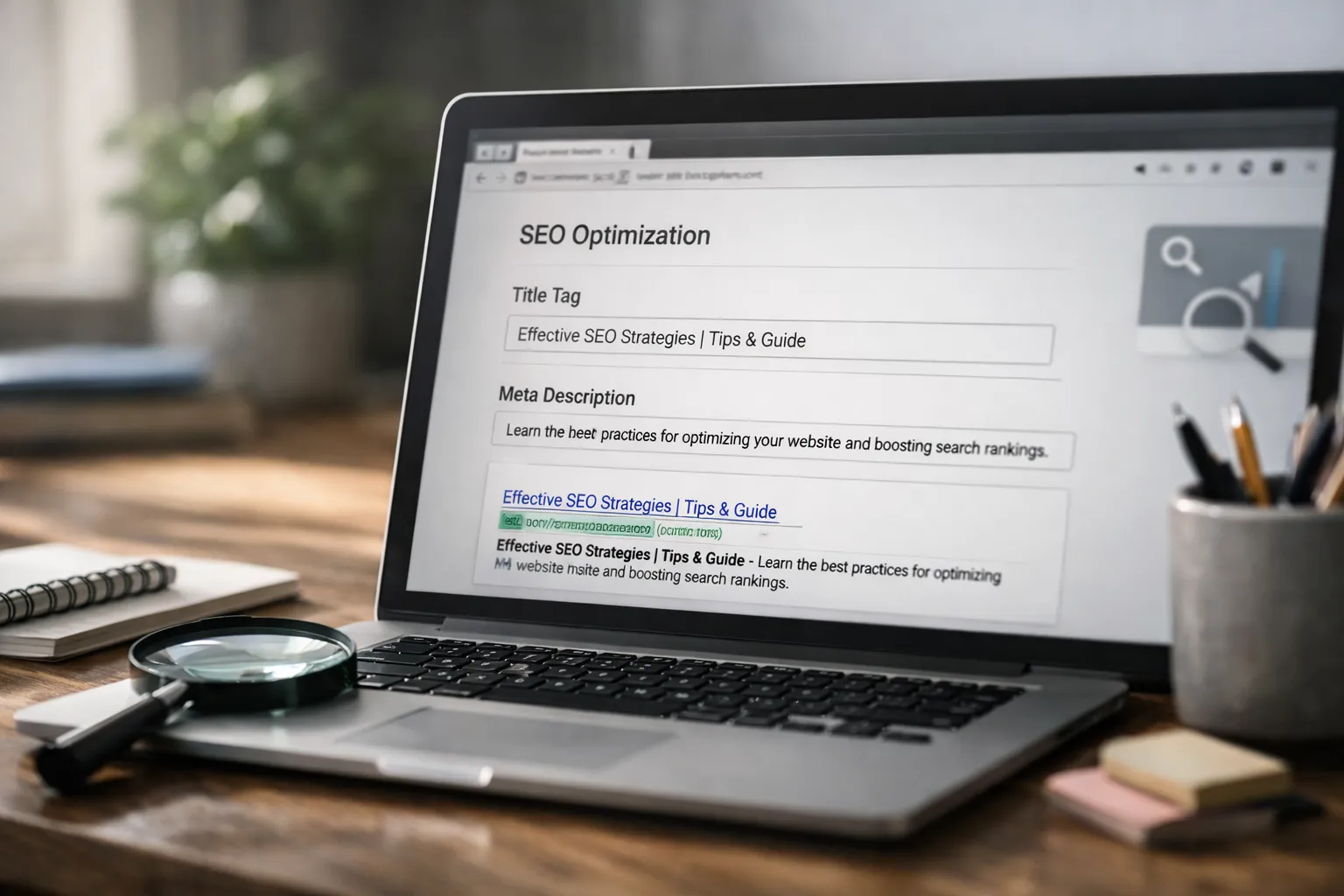
Start with the page elements people and search engines notice first. Your title should clearly describe the page and include the primary topic naturally. Headings should create a clean outline. URLs should be short and readable. Meta descriptions do not directly rank a page, but they can improve clicks if they set accurate expectations.
Use internal links to connect related pages, especially from high visibility pages to the ones you want search engines to understand better. If you publish a guide about tax planning, link to your tax planning service page with natural anchor text. That creates context and helps visitors move deeper into the site.
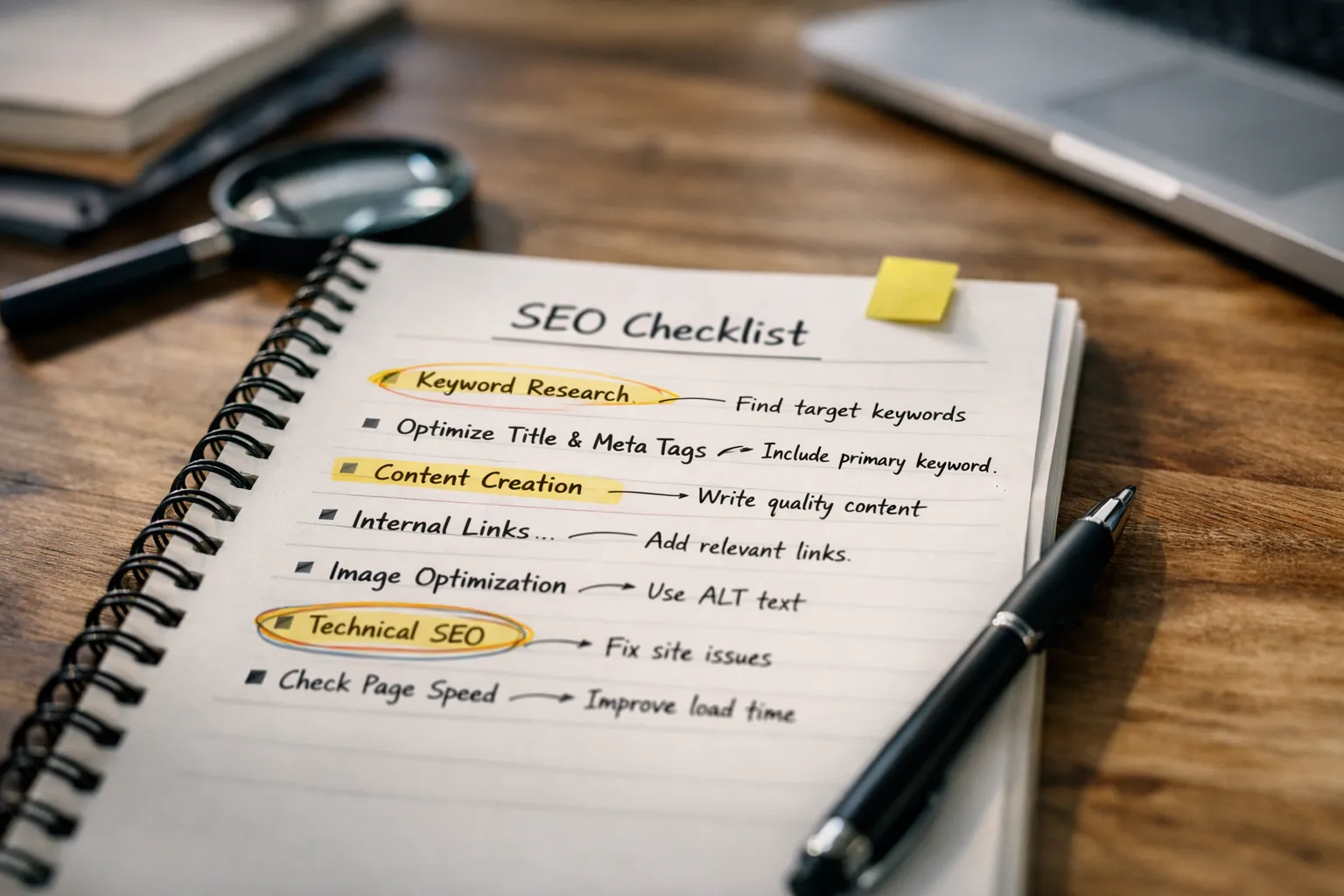
A simple checklist keeps you honest:
- Write a focused title and one clear H1 for each page.
- Keep URLs short, descriptive, and consistent.
- Add internal links to relevant supporting and conversion pages.
- Review meta descriptions so the snippet is useful, not vague.
Write content that matches search intent and improves the page experience
Good content is not longer by default. It is better matched. If the searcher wants a quick definition, a 4,000 word essay may fail. If they want a detailed tutorial, a thin paragraph will not satisfy them. Study the results page, then create something more helpful, clearer, or easier to use.
Page experience matters too. Break text into readable sections. Use examples. Remove clutter. Help people find the answer fast. One service business I advised rewrote dense homepage copy in plain language, added a short FAQ, and placed stronger internal links to its service pages. In six weeks, the average time on page improved by 27 percent, and the main service page moved from position 18 to position 9 for its primary term. Better experience often supports better signals.
Content should feel like a helpful guide, not a locked door.
Days 22-30: Start Off-Page SEO and Build Beginner Best Practices
Off page SEO sounds intimidating, but the beginner version is simple. Build credibility beyond your own website and protect yourself from shortcuts that age badly. As you learn seo, think reputation, not tricks.
Understand backlinks, authority, and safe ways to earn visibility beyond your site
A backlink is a link from another site to yours. Search engines can treat that as a sign that your page is worth referencing, especially when the link comes from a relevant, trustworthy source. Not all links are equal, and more is not always better. One strong mention from a respected industry site can matter more than dozens of low quality directory links.
Safe link building usually looks a lot like good marketing. Publish something worth citing. Pitch a useful quote to a journalist. Create a local resource page. Join a chamber of commerce directory if it is legitimate and relevant. Partner with complementary businesses and ask whether your guide or research would help their audience. The Bing Webmaster Guidelines are a good reminder that manipulative link schemes are not a beginner friendly path. Slow and credible wins here.
SEO is slow, but it compounds.
Keep the right habits, avoid common mistakes, and review progress every week
Weekly reviews prevent random activity. Open Search Console, compare the last seven days with the previous period, and ask simple questions. Which pages gained impressions? Which queries appeared for the first time? Which pages earn views but no conversions? That short ritual teaches pattern recognition quickly.
The common mistakes are familiar. Publishing without search intent. Rewriting titles every three days. Ignoring internal links. Measuring traffic but not leads. Copying competitors line for line. Study SEO, but do not chase noise. Consistency is the real advantage. Keep a short changelog, celebrate small gains, and let the data show you what deserves another round of work.
If you want a practical routine after this first month, spend one day researching topics, one day improving an existing page, one day reviewing technical basics, and one day promoting your best resource. Boring? Maybe. Effective? Very often.
FAQ for Learn SEO
After 30 days, most beginners have the same concerns. They want to know whether they are moving too slowly, whether they need a website right away, and whether free tools are enough. Here are the straight answers.
How long does it take to learn SEO, and when should I expect rankings to change?
You can understand search engine optimization basics in a few weeks, but confidence comes from repetition. The first month usually teaches vocabulary, workflow, and pattern recognition. Real ranking changes often take longer, especially on new sites. Some title and internal link updates can influence clicks within days, but broader gains often take several weeks or months.
That delay is normal. Search engines need time to crawl changes, reprocess pages, and compare your content with competing results. If your site is new, trust signals may be limited at first. Think of the first 30 days as training your eye. You are learning what good pages look like and how to improve them with evidence. Even experienced marketers still test, review, and adjust because the work is never fully finished.
Can I learn SEO without a website, do I need paid tools, and what should I do after the first 30 days?
Yes, you can begin without your own site by studying result pages, reading documentation, and practicing with sample content. Still, nothing replaces a real site, even a small one, because SEO is part theory and part feedback loop. You need to see impressions, clicks, indexing, and user behavior over time.
You do not need paid tools to start. Search Console, Analytics, Google autocomplete, and the results page itself can teach you a lot. Paid platforms become useful when you want faster research, deeper competitor data, or larger content plans. After day 30, pick a simple cycle and repeat it: research one topic cluster, publish or improve one page each week, strengthen internal links, and review outcomes monthly. That is how a beginner seo guide turns into a working skill.
Final Takeaway: Keep Practicing After Day 30
The biggest shift after your first month is mental. You stop asking what SEO is and start asking what this page needs next. That is real progress. The best way to learn seo after day 30 is repetition with feedback.
Keep your scope small. Improve one page. Track one metric. Study one results page carefully. Over time, those small sessions build judgment, and judgment is what separates random optimization from useful work. A handful of steady improvements can outperform one burst of enthusiasm that fades within a week. You do not need perfect knowledge to move forward. You need a clear process, a little patience, and the willingness to keep testing what helps people find and trust your site.