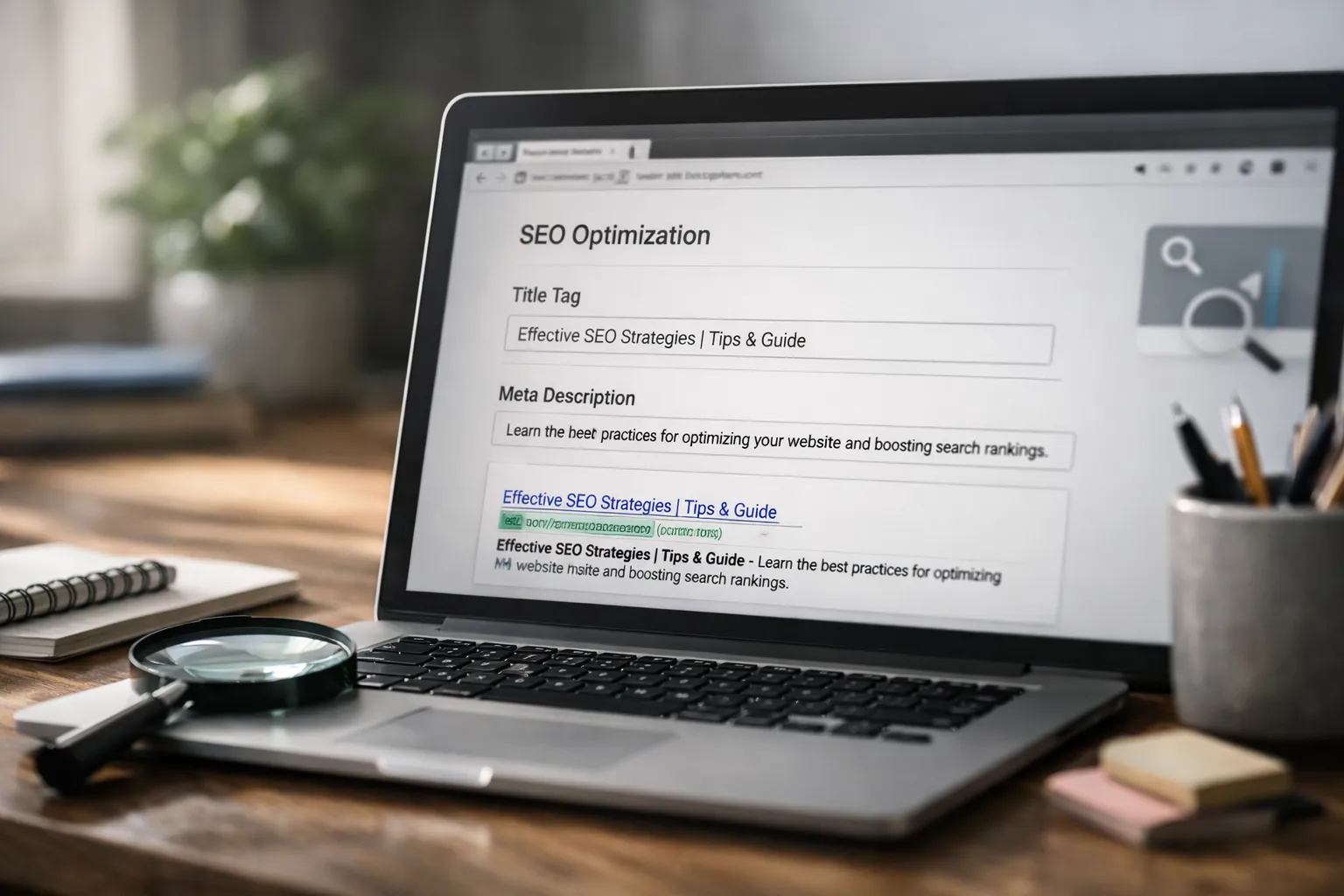
What makes someone click one search result and skip the one right above it? Often, it is not the page with the biggest brand or the oldest domain. It is the result that looks most useful at a glance. That is why seo best practices for title tags and meta descriptions matter so much. These short lines of text work like your page's shop window. If the window looks dusty, vague, or cluttered, people keep walking.
Many beginners spend weeks tweaking content and keywords, then treat titles and descriptions as an afterthought. That is backwards. A strong snippet tells search engines what your page covers and tells real people why they should care. Better still, it can improve click rate even before your rankings change.
Think of it this way. Ranking gets you invited to the party. A great title and meta description get you asked to dance. In this guide, you will learn how to write clearer titles, shape more persuasive descriptions, and adapt proven formats for homepages, service pages, products, and blog posts. Nothing fancy. Just practical search engine optimization best practices you can start using today.
Why Title Tags and Meta Descriptions Matter in SEO Best Practices
Title tags and meta descriptions are small elements with an outsized impact. They help search engines interpret a page, and they help people decide whether your result looks relevant, trustworthy, and worth a click. Small fields, big consequences.
What search engines and searchers use them for
The title tag is the main label search engines use to understand and present a page. In many cases, it becomes the clickable headline in search results, though Google Search Central explains that Google may rewrite it when another version seems more helpful for the query. The meta description is not usually a direct ranking signal, but it often provides the summary text beneath the title, and that summary shapes first impressions fast.
For searchers, these elements answer silent questions. Is this page about what I need? Is it current? Is it for beginners or experts? If someone searches for plumber in Austin emergency repair and your title simply says Home, you have already lost that moment. Good snippets reduce doubt. And doubt kills clicks.
Why better snippets can raise clicks even before rankings improve
A cleaner title and description can increase click through rate without moving a page higher in the results. That matters because a higher click rate brings more qualified visitors from the same number of impressions. In one of the simplest website optimization best practices, you improve the packaging before rewriting the product.
Imagine a local dental clinic. Its service page ranks in position six for teeth whitening. The old title says Services | Bright Smile Dental. The new one says Teeth Whitening in Leeds | Bright Smile Dental. Same page. Same ranking. Far clearer promise. Searchers immediately understand what they will get.
This is not just theory. SearchPilot has published tests showing that title tag changes can lift organic sessions by meaningful double digit percentages on large sites. Better snippets do not create magic. They remove friction. Often, that is enough.
On-Page SEO Title Tag Best Practices for Beginners
If title tags feel tricky, that is normal. They ask you to be clear, relevant, specific, and appealing in a very small space. But once you understand the pattern, writing them gets much easier.
How to write SEO titles that earn clicks
One of the most useful seo best practices is to write titles for both intent and curiosity. You want the page topic to be obvious, but you also want a reason to click your result instead of the one beside it. A great title is not clever first. It is clear first.
A simple checklist helps:
- Put the primary topic near the beginning.
- Match the search intent of the page.
- Add a concrete benefit, detail, or outcome.
- Keep it readable and natural.
- Use the brand name only if it adds trust or fits the format.
For example, compare two blog titles. Beginner Guide to Composting is decent. How to Start Composting at Home: A Beginner Guide is stronger because it leads with the action and sets a clear expectation. It sounds like help, not a filing label.
How to improve SEO with better meta titles
Strong meta titles support seo basics by helping search engines connect the page to the right searches and by helping people choose your result. That does not mean cramming variations into every title. Keyword stuffing makes titles look robotic, and search engines are good at spotting that.
Instead, keep one main idea per page. If you run a service business, use the service and location when relevant. If you run an online store, include product type, brand, and standout feature. If you publish content, lead with the problem solved. That is what effective seo methods look like in practice.
If you want a second opinion while drafting, tools from providers such as Ahrefs can help you review SERP wording and compare title patterns. Just remember that tools suggest. They do not choose for you. Your audience does.
Meta Description Best Practices for Beginners
Meta descriptions are often misunderstood. They are not a place to dump keywords, and they are not a miniature essay. Their real job is simple: reassure the searcher that your page is relevant and worth the click.
A simple formula for clear, click-worthy meta descriptions
A beginner friendly formula is this: state the page topic, add the benefit, then hint at what the visitor will find after the click. For a service page, that could be Service plus who it helps plus why choose you. For a blog post, it could be problem plus solution plus takeaway.
Here is the important part. Treat the description like ad copy grounded in truth, even if you start with AI prompts for faster drafts. If your page promises a checklist, the page should deliver a checklist. If it promises pricing, include pricing. Searchers can forgive plain language. They rarely forgive a mismatch.
How to use keywords naturally without sounding spammy
One of the easiest seo best practices to follow here is using the primary term once, where it fits naturally, and then writing like a human. Search engines may bold words that match the query, which helps your snippet stand out. But repeating the same phrase three times usually makes the description weaker, not stronger.
The safest approach is to write for relevance, not repetition. Use the main topic once, then support it with plain language that reflects intent. That is one of the most dependable organic search best practices because it keeps the snippet readable.
| Page type | Weak description | Better description |
|---|---|---|
| Homepage | Welcome to our website with many services and solutions for all needs. | Explore accounting services for small businesses, from bookkeeping to tax support, with clear pricing and expert guidance. |
| Service page | We offer roof repair services for all customers. Contact us today. | Need roof repair in Bristol? See common fixes, response times, and how our team handles urgent callouts. |
| Blog post | Learn SEO in this article with useful information and tips. | Learn how to write title tags and meta descriptions that earn more clicks with simple examples and beginner friendly steps. |
Website SEO Title and Meta Description Examples You Can Adapt
Examples make this easier because you can feel the difference between vague wording and focused wording. The goal is not to copy a formula word for word. It is to see the pattern, then adapt it to your own page.
Homepage, service page, product page, and blog post examples
A homepage title should explain who you are and what you offer. A service page title should lead with the service. A product page title should identify the exact product plus a distinguishing feature. A blog post title should promise a clear outcome. That is where search engine optimization best practices stop feeling abstract and start feeling practical.
Here is a quick visual reference for the kind of wording that tends to work well across common page types.
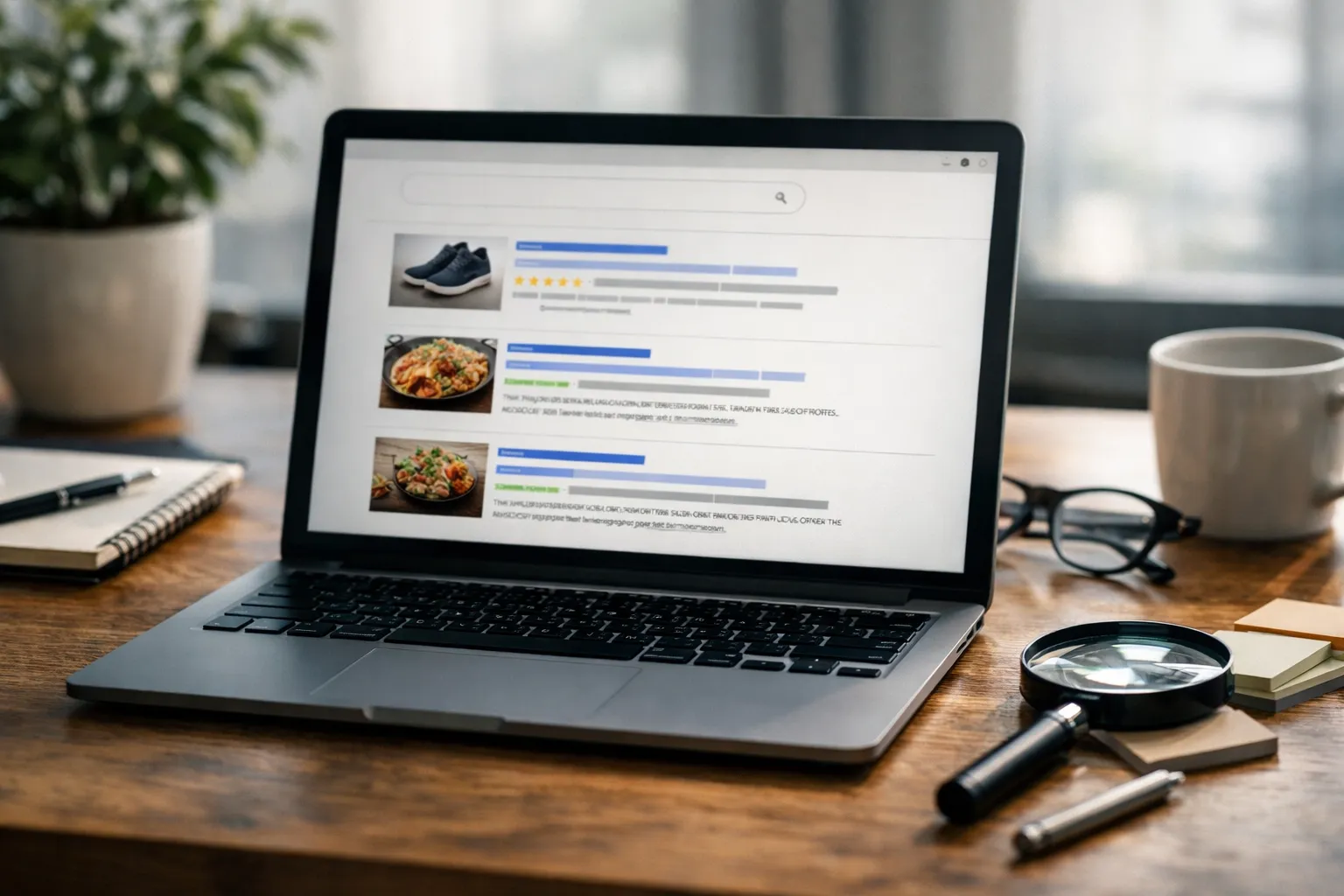
For instance, a homepage might use Baker Street Physio | Sports Injury Clinic in London. A service page could use Boiler Repair in Manchester | Same Day Engineer Visits. A product page might use Stainless Steel Water Bottle 1L | Leakproof Travel Flask. A blog post could use How to Clean White Trainers Without Damaging Them.
Notice the pattern. Specific beats generic. Concrete beats clever. Clarity wins.
SEO optimization for title tags and meta descriptions with before-and-after rewrites
Another smart seo best practices habit is rewriting weak snippets before touching the body copy. If a page already ranks on page one or two, a stronger title and description can be the fastest meaningful test.
Below are simple before and after rewrites you can adapt. The better versions are not flashy. They just answer the searcher's likely question faster.
| Page type | Before | After |
|---|---|---|
| Homepage | Home | Green Oak Kitchens |
| Service page | Services | Loft Conversion Services in Birmingham |
| Product page | Running Shoes | Men's Trail Running Shoes |
| Blog post | Blog Post About Meal Prep | Meal Prep for Beginners: 7 Easy Lunches for Busy Weeks |
| Meta description rewrite | We are a company with quality products and services for customers everywhere. | Compare custom kitchen styles, view recent projects, and request a free design consultation in Leeds. |
A small business owner I worked with once changed a title from About Our Plumbing Services to Emergency Plumber in York | 24 Hour Callouts. Over the next month, the page held roughly the same average position, but clicks rose by 28 percent in Search Console. Same shelf. Better label.
Beginner FAQ About SEO Titles and Meta Descriptions
These are the questions nearly everyone asks at the start. The good news is that the answers are simpler than they seem. You do not need perfect wording. You need wording that is relevant, unique, and useful.
How long should an SEO title and meta description be?
A practical rule for seo best practices is to think in terms of display space, not strict character limits. Titles often display well at around 50 to 60 characters, while descriptions often show around 140 to 160 characters. But search results are dynamic, and Google may show more or less depending on device, query, and wording.
So what should you do? Write the most important information first. Put the main topic near the beginning of the title. In the description, lead with the clearest benefit or summary. If the end gets cut off, the core message still survives.
Shorter can be better when the topic is obvious. A page called Wedding Photographer in Bath does not need extra fluff. Precision is enough.
Should every page have a unique title and meta description?
Yes, every important page should have a unique title, and most important pages should also have a unique meta description. This is one of the most overlooked seo recommendations for growing sites. Duplicate titles make it harder for search engines and users to tell pages apart.
Templates are fine if they are customized with variables like product name, service, category, or city. What you want to avoid is fifty pages all called Our Services or Product Page. Unique snippets act like name tags. Without them, everyone at the event starts to look the same.
FAQ for SEO Best Practices and Your Next Steps
Once your core pages have stronger titles and descriptions, you have already done meaningful work. This is not busywork. It is one of the fastest ways to make existing content easier to discover and easier to choose.
Can meta descriptions improve rankings or mainly click-through rate?
When people talk about seo best practices, this is one of the most common points of confusion. Meta descriptions mainly affect click through rate, not direct rankings. Google's snippet guidance is clear that descriptions are primarily about helping users understand the result.
That said, improved click rate can still matter for business outcomes because more of the right people visit your page. If the page then satisfies them, you gain more value from the impressions you already earned. Think of the description as the promise that gets the visit, while the page content fulfills that promise.
How often should you update titles and meta descriptions?
Review them when search intent changes, when a page target changes, or when Search Console shows strong impressions but weak clicks. That is the sweet spot for proven seo techniques. The page is visible, but the snippet is not persuasive enough.
A simple rhythm works well. Check key pages every quarter. Revisit seasonal pages before peak periods. Update blog posts when the year, angle, or promise feels stale. Then compare clicks and click rate after a few weeks. Do not change everything at once. Test the pages with the biggest upside first.
If you want a practical next step, open your top ten high impression pages and read each title and description out loud. If it sounds vague, repetitive, or forgettable, rewrite it. Little lines can move real traffic.